
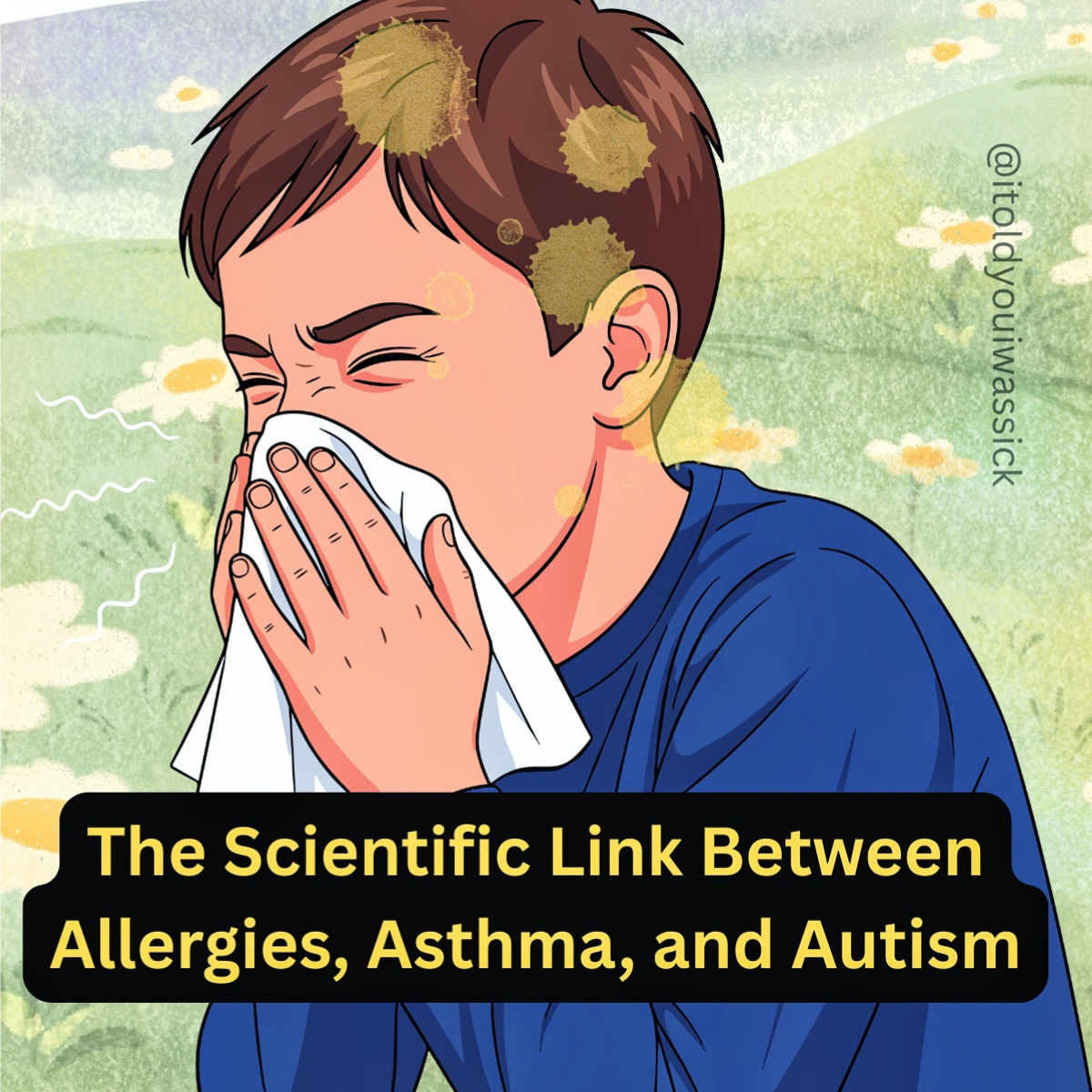

The Scientific Link Between Allergies, Asthma, and Autism

Allergies, Asthma, and Autism. What do these three have in common, besides starting with the letter “A”?
Histamine.
This H-word is a crucial chemical released in the body following an allergic reaction. It’s heavily involved in immune responses and bodily functions as a whole (digestion, consciousness, respiratory function).
The body speaks in signals, and every system listens. When one part shifts, the echo travels. In a sensitive, neurodivergent child, that shift may appear as an overactive histamine response, creating yet another dimension of challenge. And people – parents particularly – are starting to notice that their autistic child is also plagued with environmental and/or food allergies.
Increased amounts of histamine release symptoms include:
- Itchy or watery eyes
- Sneezing or runny nose
- Hives or eczema
- Swelling
- Difficulty breathing
- Digestion issues
As ever-evolving humans, we’ve started to keep track of this phenomenon. JAMA Network Open used data from 200,000 children ages 3-17 during the CDC’s National Health Interview Survey (1997–2016). [1] Not only did they find that Autism prevalence has risen 0.79% from 2000 to 2012, but also…
- 11.25% of children with ASD were reported to have a food allergy, compared to 4.25% of children without ASD.
- Children with ASD were also more likely to report:
- Respiratory allergies: 18.7% vs. 12%
- Skin allergies: 16.8% vs. 9.8%
(Article continues below)
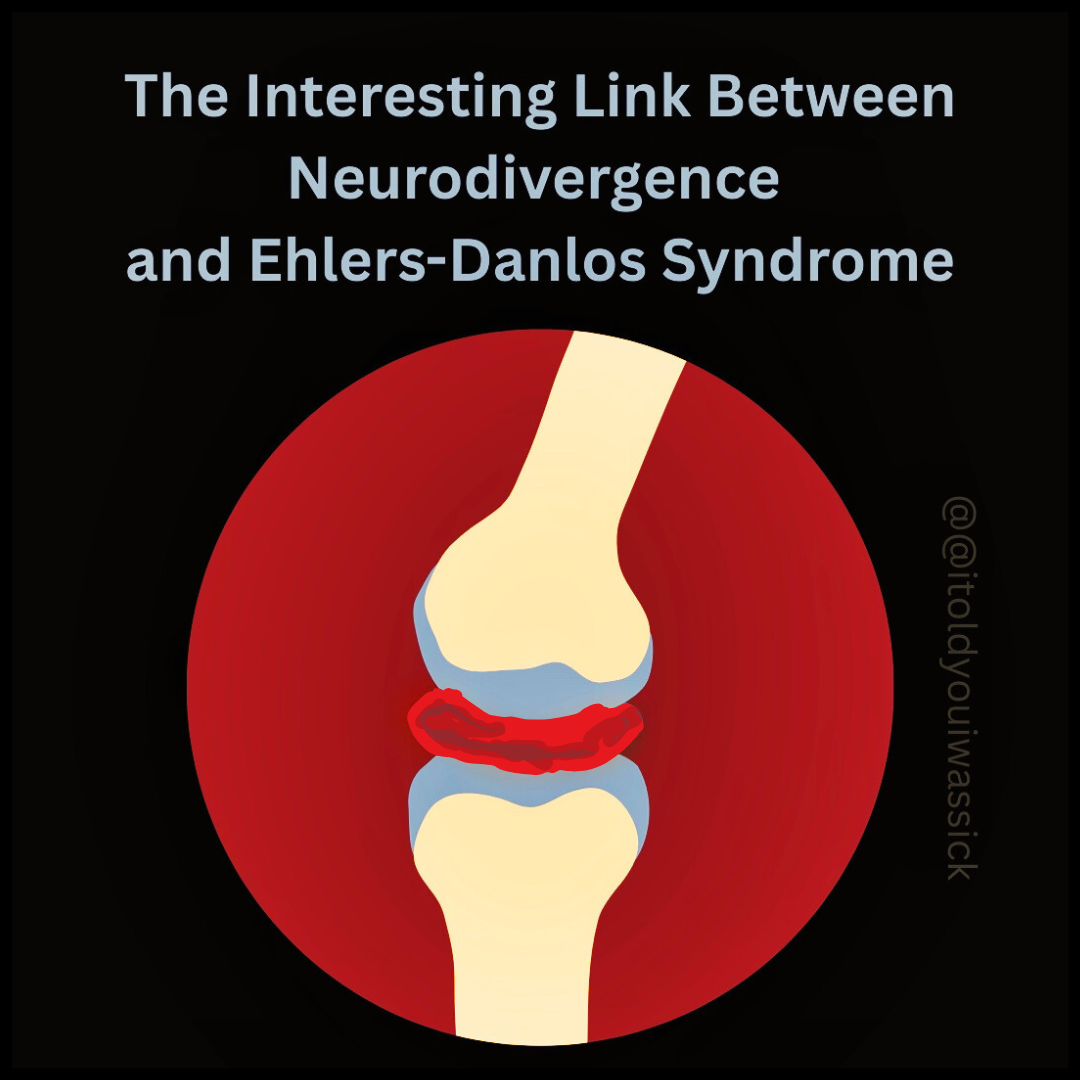
The Interesting Link Between Neurodivergence and Ehlers-Danlos Syndrome
The Celiac Disease Foundation recounts that gluten sensitivity has significantly risen at the turn of the new century. Not only is this due to awareness, but again, it is linked to neurodivergence. A study, titled Markers of Celiac Disease and Gluten Sensitivity in Children with Autism, was conducted by researchers from Columbia University Medical Center and led by Dr. Armin Alaedini, with funding from the U.S. Department of Defense, and was reported through Medscape. [2] Its key findings are as followed:
- Autistic children had higher levels of IgG antibodies to gliadin (a gluten protein) than children without autism.
- Among autistic children, those with gastrointestinal (GI) symptoms had even higher IgG levels than those without GI symptoms.
- IgA antibody levels did not differ, suggesting the response wasn’t centered in the gut lining.
- There was no evidence of celiac disease: celiac-specific antibodies and genetic markers (HLA-DQ2/DQ8) were similar across all groups.
As expected, common symptoms of gluten intolerance may include hives and eczema, digestive issues, and in some extreme cases, respiratory issues. One can properly assume that it is the histamine at work, which creates chaos for the body.
These studies pose some interesting questions, but alas, they were unable to fully confirm the direct link between allergies and neurodivergence. As usual, the citation of “genetics” as a cause was used to support the idea, but not the direct proclamation of this phenomenon to be scientifically true. In short, the idea lingers in theory, but stops short of scientific confirmation.
Conversely, it IS all so complicated. You have a myriad of things happening in the body, simultaneously, all affected by some issue or another. It’s hard to distinctly narrow it down. It’s even harder to prevent the issue in the first place. However, the hardest thing, above all else, is dealing with a hyperactive system in a world that demands normalcy.
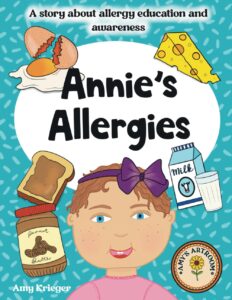
Help your child’s teachers and classmates better understand food allergies by picking up a copy of Annie’s Allergies!